Shedding Light on a Vitamin D Deficiency in African Greys

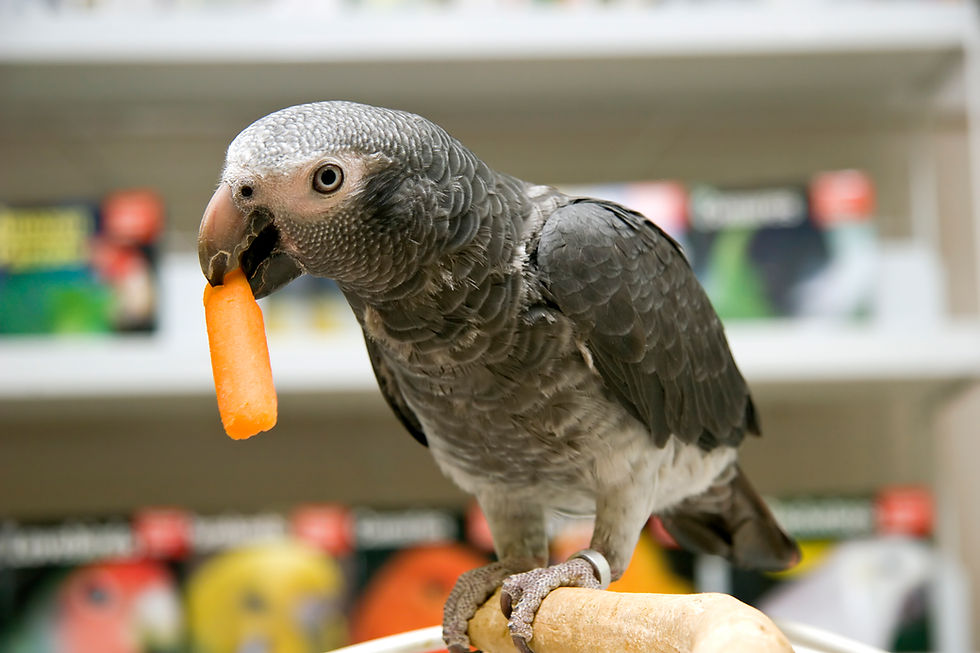
Ever wonder why African Greys have bare skin around their eyes, as it often looks like they are wearing a white mask to a masquerade ball? Well, it is believed that this bare skin helps them absorb more direct UVB to synthesize into Vitamin D. Vitamin D deficiency is one of the many health issues that arise when parrots have limited exposure to UVB.
Without proper exposure to UVB light or the right diet, African greys can also develop hypocalcemia, a calcium-related condition that may cause weakness, tremors, or even seizures.
Before you make any changes to your bird’s diet or lighting, it’s best to check in with an avian specialist, ideally an experienced parrot vet. A professional familiar with African Grey physiology can identify early imbalances and prevent small issues from turning into emergencies.
The Vitamin D–Calcium Connection
Vitamin D isn’t just a nutrient; it’s a hormone that helps your parrot absorb calcium, which in turn supports bone strength, muscle control, and nerve function. Many African Greys kept indoors or fed seed-heavy diets have been shown to develop low levels of stored vitamin D₃ (25-hydroxycholecalciferol), which directly affects their calcium absorption.
When vitamin D levels drop, the body can’t use calcium efficiently. In response, the parathyroid glands release more hormone to pull calcium from the bones, a process that can eventually lead to fragile bones and neurological symptoms such as tremors or seizures. Known as nutritional secondary hyperparathyroidism, this condition is one of the most common metabolic issues seen in captive African greys.
African Greys are able to naturally produce Vitamin D in their skin. It works through the uropygial gland that is located at the base of the tail. This gland secretes Vitamin D precursors (7-dehydrocholesterol) that are converted to the active form of Vitamin D3 when exposed to UVB. During preening, this active form of Vitamin D3 is ingested by the bird as well.
Why Sunlight Alone Isn’t Always Enough
In the wild, African Greys enjoy filtered equatorial sunlight year-round. Indoors, even bright natural light through a window won’t cut it; ordinary glass blocks the UVB rays that allow birds to produce vitamin D in their skin.
To recreate this safely, many avian specialists recommend UVB-producing lamps designed specifically for birds. Controlled UVB exposure helps maintain healthy vitamin D levels and proper calcium metabolism.
The correct setup depends on your bulb’s strength, distance, and replacement schedule—details that your avian vet can help you fine-tune for your space.
Diet: More Than Just Seed Mixes
Even the best lighting can’t make up for poor nutrition. Seed diets are naturally low in both calcium and vitamin D₃. A balanced pelleted diet, ideally formulated for African Greys, should form the foundation of your bird’s meals.
A healthy plan often includes:
Formulated pellets as a base diet
Fresh vegetables and leafy greens for natural minerals
Measured UVB exposure for vitamin D activation
Avoid adding vitamin supplements without professional guidance—too much vitamin D can cause toxicity. A targeted diet plan, created with your vet’s input, keeps your grey’s calcium and vitamin D levels in the healthy range.
For more on daily care and diet, explore our Parrot Care Guide.
Healthy Mind, Healthy Body
Adequate vitamin D supports nerve and muscle function, helping your bird move, perch, and play comfortably. Combine this with regular enrichment to keep your African grey’s mind engaged, because a stimulated parrot is a happier, healthier one.
A Bright Future for Your Grey
The good news?
With proper diet, light, and veterinary care, vitamin D deficiency is entirely preventable. Whether your African Grey is showing early signs of imbalance or you simply want to stay proactive, our avian-specialty team can help keep their levels—and spirits—where they should be.
Support your parrot’s long-term health with a visit to Long Island Bird & Exotics Veterinary Clinic.