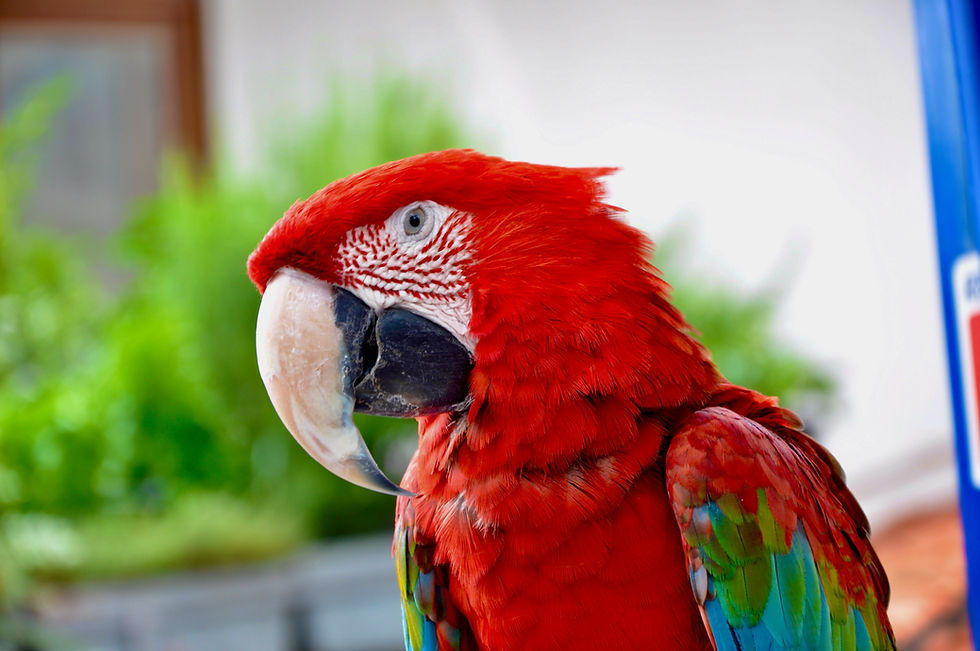
Severe Macaw Rescue and Infectious Disease Testing for Queens Patient at Long Island Bird & Exotics Veterinary Clinic

Case Study #29: Rescue Macaw Wellness & Diagnostics
Patient: Severe Macaw (Age Unknown) Location: Queens, NY
Finding a lost or abandoned parrot can be very unexpected. A Severe Macaw (Chestnut-Fronted Macaw) was found outdoors in Queens, NY and taken in by a kind-hearted individual. After providing care and making efforts to locate his original owners, the bird was brought to Long Island Bird & Exotics Veterinary Clinic for a comprehensive evaluation.
Bringing a bird of unknown history into a home, especially if there are other birds present, carries significant risk. This case outlines the "Gold Standard" protocol for rescued avian patients.
The Patient: Unknown History The patient presented as bright, alert, and responsive. He had a small scab on his face, likely from his time surviving outdoors. Aside from that, he appeared healthy. However, "appearing healthy" is not enough in avian medicine. Birds can carry silent, deadly viruses for years without showing symptoms.

The Diagnostics: The "New Bird" Workup To ensure the bird was safe to be a family pet, we recommended a comprehensive diagnostic panel.
1. Infectious Disease Panel We tested for infectious avian diseases, including:
Psittacosis (Chlamydia psittaci): A bacterial infection that is zoonotic (can spread to humans).
Psittacine Beak and Feather Disease (PBFD): A fatal viral condition affecting the immune system and feathers.
Polyomavirus: A virus that can be fatal, especially to young birds.
2. Systemic Bloodwork (CBC/Chem) We ran a Complete Blood Count and Chemistry panel to check organ function, and to look for signs of chronic infection or inflammation (high white blood cell count).
3. Fecal Analysis Birds found outdoors often ingest parasites. We checked for worms, protozoa, and abnormal bacteria.
4. DNA Sexing Since Severe Macaws are not sexually dimorphic (males and females look the same), we sent a blood sample for DNA sexing. Knowing the gender helps us anticipate future behavioral or reproductive issues.
The Results: A Happy Ending Fortunately, the patient was a lucky bird.
Disease Testing: Negative for all infectious diseases.
Bloodwork: Within normal limits.
Gender: Confirmed Male.
With these results, the owners could confidently integrate the bird into their lives without fear of spreading disease to themselves or other pets. We also spent time educating the new owners on Macaw-specific diet, enrichment, and training to ensure the bird's psychological needs were met.
Frequently Asked Questions (FAQs)
I found a bird outside. What should I do? First, safely contain the bird in a secure cage or carrier. Keep the bird separated from any other pets to prevent potential disease transmission. Next, try to locate the owner by contacting local shelters, lost-and-found pet networks, or social media groups. Finally, have the bird examined by an avian veterinarian before introducing it to other birds, so it can be tested for infectious diseases such as Psittacosis or PBFD.
Do you treat Macaws? Yes, we see all species of Macaws, from the smaller Severe and Hahns Macaws to the large Hyacinths. We have the equipment and handling expertise required for these powerful birds.
Contact Long Island Bird & Exotics Veterinary Clinic: Website: https://www.birdexoticsvet.com/ Phone: (516) 482-1101