
Rabbit Liver Lobe Torsion Emergency Surgery for Queens Patient at Long Island Bird & Exotics Veterinary Clinic

Updated: Feb 5
Case Study #23: Rabbit Liver Lobe Torsion Surgery
Patient: Rabbit (Age 7 months) Location: Queens, NY
Liver lobe torsion (LLT) is a serious and painful emergency seen in rabbits that requires urgent veterinary care. Treatment typically requires surgical intervention and aggressive supportive care to stabilize the patient and prevent further tissue damage, internal bleeding, and the release of toxins into the bloodstream.
A 7-month-old rabbit from Queens, NY, presented to our clinic with symptoms of GI Stasis. Advanced diagnostics revealed an underlying and far more serious cause: liver lobe torsion.
The Patient: A Sudden Decline The owners noticed the rabbit had reduced appetite and decreased defecation for about 24 hours. The patient was lethargic and hiding. In the rabbit world, these are often signs of Gastrointestinal Stasis.
Upon physical examination, Dr. Lee noted that the rabbit was extremely painful in the cranial abdomen (upper belly), near the ribs. A firm, rounded structure was palpable. This specific localization of pain raised a red flag.
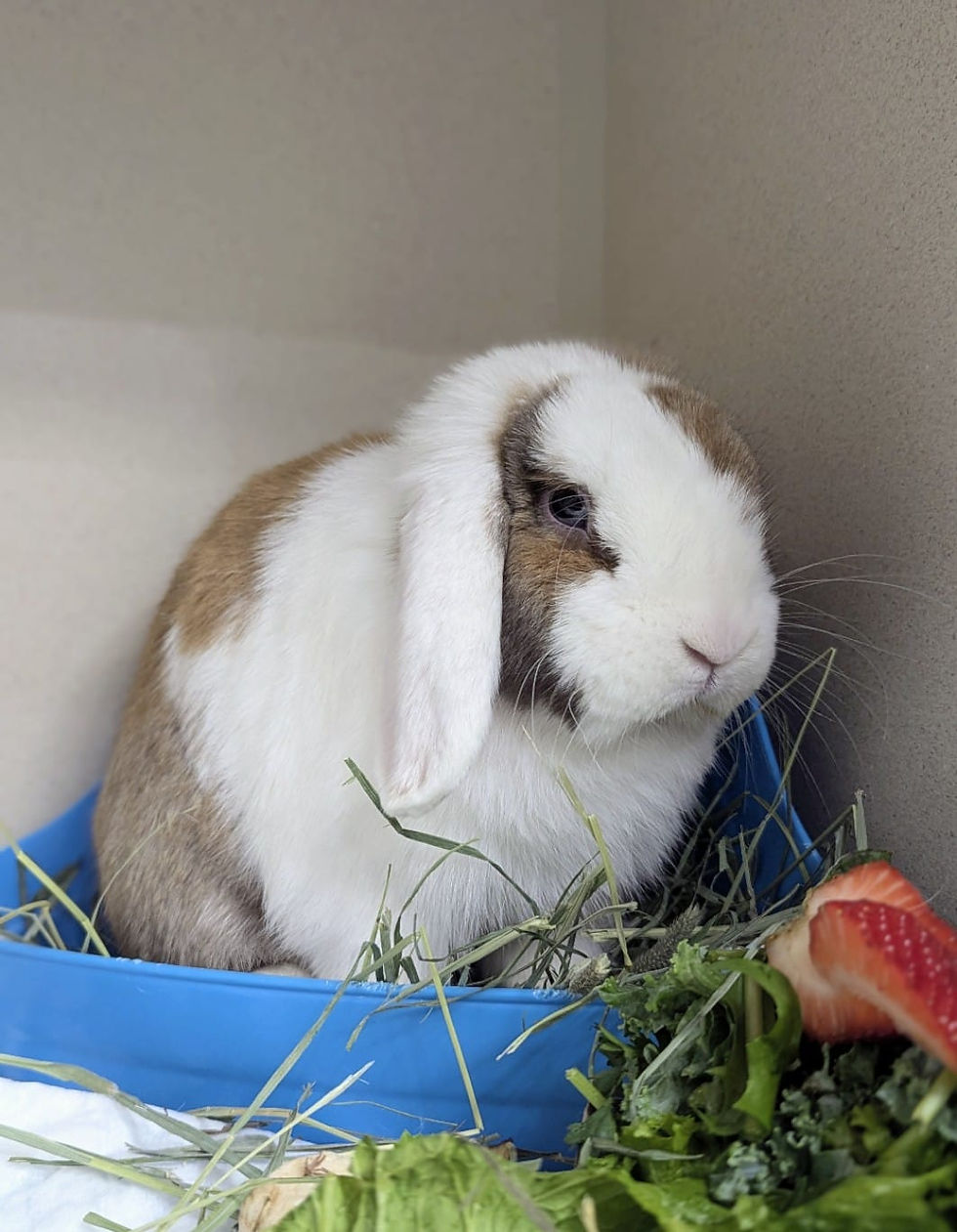
The Diagnosis: Liver Lobe Torsion To differentiate between simple stasis and a surgical emergency, we ran immediate diagnostics.
Bloodwork: The patient's liver enzymes (ALT) were dangerously elevated, and the rabbit was anemic (low red blood cells), suggesting internal bleeding or sequestration of blood in the liver.
Radiographs: Imaging confirmed an enlarged liver shadow and ruled out a simple stomach blockage.
The combination of cranial abdominal pain, anemia, and sky-high liver values are all classic signs for Liver Lobe Torsion.
The Treatment: Emergency Liver Resection Rare cases may improve without surgery, but medical management alone cannot reliably resolve a twisted liver lobe, making surgery the standard treatment.
The Surgery: The patient was taken to surgery, where a liver lobe resection was performed. Using specialized cautery and surgical equipment, the twisted and nonviable lobe was removed. This relieved the source of pain and prevented further release of inflammatory and toxic byproducts into the system.
Neutering: Since the rabbit was already under anesthesia and stable, we also performed a neuter procedure to prevent future reproductive or behavioral issues.
Recovery: A Life Saved Post-operative care for LLT patients is intensive. The patient was hospitalized in our ICU for several days.
Supportive Care: The rabbit received intravenous fluids to support hydration and cardiovascular stability, along with opioid pain medications to manage post-surgical discomfort.
Nutrition: Assisted feeding was provided by our nursing team until the patient was able to resume eating hay independently.
The rabbit made a full recovery. He was discharged to his family in Queens, eating and pooping normally. This case underscores why specialized rabbit knowledge is vital.
Frequently Asked Questions (FAQs)
What causes Liver Lobe Torsion in rabbits? The exact cause is unknown, but it is believed to be related to the anatomy of rabbit livers, which have very mobile lobes. It can happen spontaneously or potentially be triggered by trauma or GI stasis. It is most common in Lop-eared rabbits, but it can happen to any breed.
How do I know if my rabbit has LLT? The outward signs of LLT can be very subtle and often mimic common conditions like gastrointestinal stasis, such as reduced appetite or hiding. Rabbits with LLT may appear unusually painful, but this can be difficult to assess. Some may press their belly to the floor, grind their teeth, or show pale gums, but these signs alone are not enough to make a definitive diagnosis. Advanced diagnostics, such as bloodwork and imaging, are necessary to identify LLT.
Is liver surgery safe for rabbits? Liver lobe resection is a significant procedure and carries some risk, but in most cases, it is the most effective way to treat liver lobe torsion. At Long Island Bird & Exotics Veterinary Clinic, our doctors have extensive experience performing liver resections in rabbits. Early diagnosis through bloodwork and advanced imaging allows us to optimize outcomes.
Can a rabbit live without part of its liver? Yes! The liver has a remarkable ability to regenerate. Removing a single twisted lobe typically does not affect the rabbit’s long-term health or digestion, though careful post-surgical care is important for recovery.
Contact Long Island Bird & Exotics Veterinary Clinic: Website: https://www.birdexoticsvet.com/ Phone: (516) 482-1101


