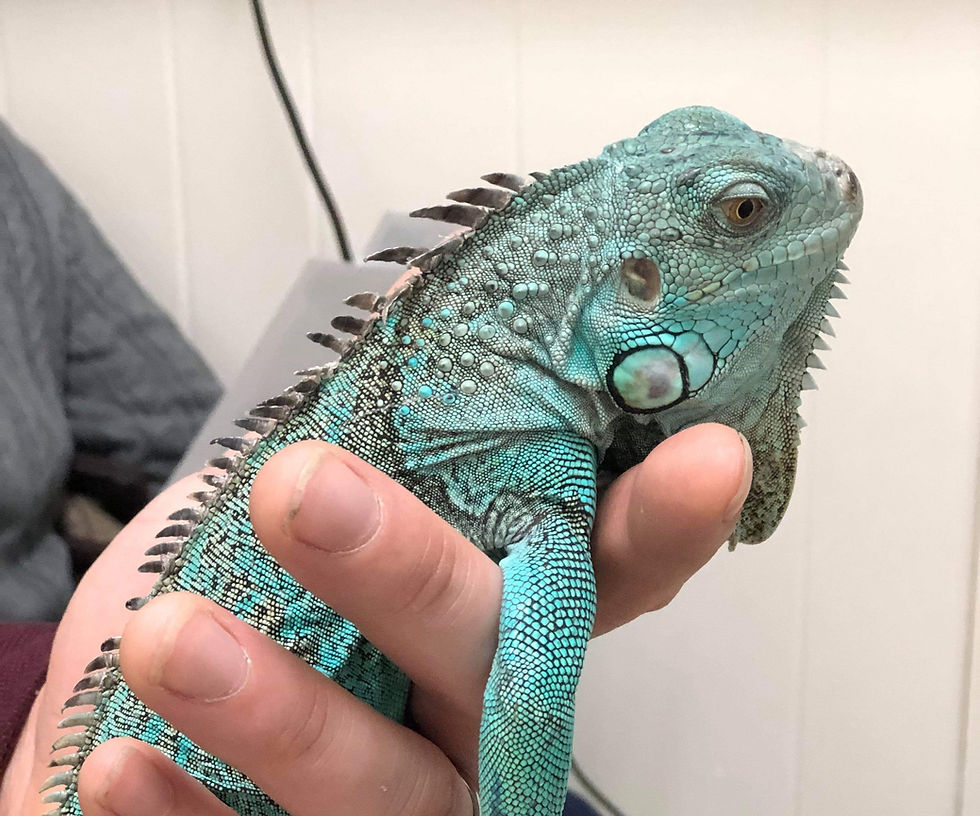
Green Iguana Cystotomy (Bladder Stone Removal) for Queens Patient at Long Island Bird & Exotics Veterinary Clinic

Case Study #34: Iguana Bladder Stone Surgery
Patient: Green Iguana (Age 6) Location: Queens, NY
Green Iguanas are impressive reptiles, but keeping them healthy in the New York climate requires strict attention to UV lighting, temperature, and diet. When these factors are off balance, even slightly, iguanas are prone to metabolic diseases and urinary stones.
A 6-year-old female Green Iguana from Queens, NY, presented to our clinic on emergency. She was lethargic, weak, and suffered a fall from the top of her enclosure. In reptiles, a fall is rarely just an accident; it is often a symptom of profound weakness.
The Symptoms: Weakness and Pain The owner reported that the patient wasn't eating and seemed unable to grip her branches. During the physical exam, our veterinarian palpated a firm, round structure in her caudal coelom (lower abdomen), and the patient reacted with discomfort.

The Diagnosis: Urolith and Hypocalcemia We rushed the patient to radiology.
Radiographs (X-rays): The images revealed a massive, multilayered, mineral-dense stone in her bladder.
Bloodwork: Confirmed that the patient was Hypocalcemic (low calcium).
This explained the fall. The large stone was uncomfortable, but the low calcium was causing muscle weakness. She physically didn't have the strength to hold on to her branches.
The Treatment: Cystotomy Before surgery, we had to stabilize the patient's calcium levels. Anesthesia can be dangerous for a patient with low calcium because calcium is required for the heart to beat properly.
Stabilization: We administered injectable calcium and fluids.
The Surgery: We performed a Cystotomy. Entering through the abdomen, we made a small incision in the urinary bladder and removed the large stone.
Closure: The bladder was sutured in two layers to ensure a watertight seal, and the skin was closed with specialized suture patterns to account for reptile scales.
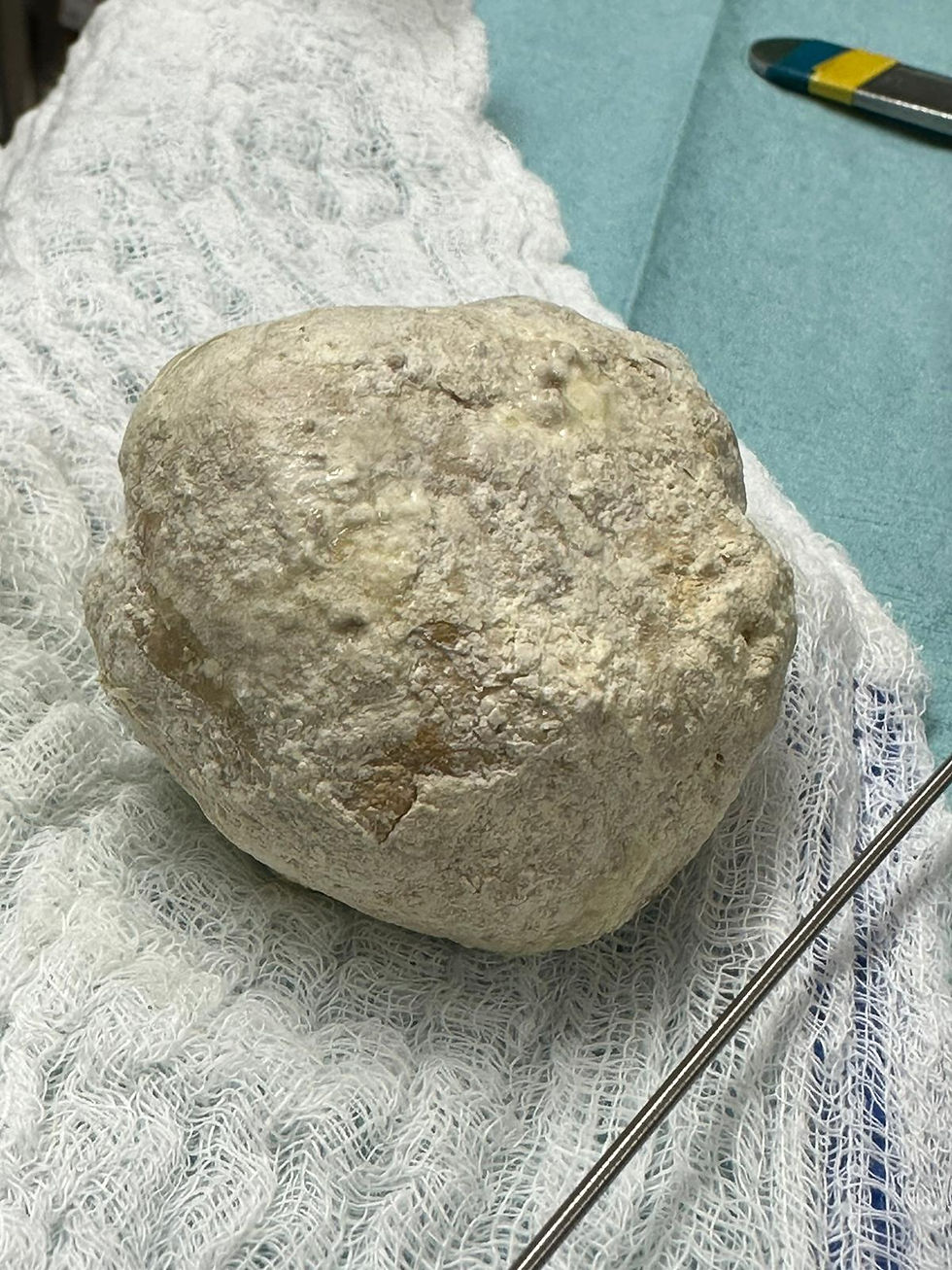
Recovery: Regaining Strength The patient recovered well. Post-operatively, she remained hospitalized for monitoring. We rechecked bloodwork and confirmed that her calcium levels were rising and that she was passing urine normally.
She was discharged to her home in Queens with instructions for diet and husbandry modification (more calcium-rich greens, appropriate UVB lighting) to prevent the stone from reforming. At her follow-up, the incision was healing beautifully, and her grip strength had returned.
Frequently Asked Questions (FAQs)
Why do iguanas get bladder stones? It is usually a combination of chronic dehydration (not soaking enough) and a diet high in oxalates (like spinach) or too much protein. Lack of proper UVB lighting also prevents them from processing calcium correctly.
How can I tell if my iguana is weak? Watch for "tremors" or twitching in the toes, muscles, and legs. Also, if they are spending more time on the floor of the cage rather than climbing, or if they fall, this is a sign of weakness and a potential sign of metabolic bone disease.
Is bladder surgery safe for iguanas? Yes. It is a common procedure for us. While anesthesia always comes with risks, the biggest risk is usually the patient's underlying health (kidney function/calcium levels). That is why we always run bloodwork before surgery to ensure their kidney and liver values are stable enough to undergo anesthesia.
Contact Long Island Bird & Exotics Veterinary Clinic: Website: https://www.birdexoticsvet.com/ Phone: (516) 482-1101