
Caique Dystocia (Egg Binding) Treatment for Brooklyn Patient at Long Island Bird & Exotics Veterinary Clinic

Case Study #25: Caique Egg Binding (Medical Management)
Patient: White-Bellied Caique (Age 9) Location: Brooklyn, NY
Not every emergency requires surgery. In some cases, with the right medical support and husbandry, the body can resolve the issue on its own. This was the case for a 9-year-old White-Bellied Caique from Brooklyn, NY, who presented with dystocia (egg binding).
Caiques are high-energy clowns of the bird world, so when the patient became quiet and developed a swollen belly, the owners knew something was wrong immediately.
The Patient: Abdominal Distention The patient presented with a history of abdominal swelling lasting 1–2 weeks. On physical examination, our doctor palpated a firm mass in the abdomen and noted fluid distention. The bird was uncomfortable, fluffed up, and straining. These are classic signs of a bird trying to pass an egg.

The Diagnosis: Confirmed Egg Binding We recommended Radiographs (X-rays) to confirm the diagnosis.
The Findings: The X-ray clearly showed a fully formed egg.
The Risk: Because the swelling had been present for several weeks, there was concern that the egg may have become adhered to the oviduct or that normal muscular contractions were no longer sufficient to pass it.
The Treatment: Medical Management First While surgery (Salpingectomy) is an option, it is invasive. Because the patient was stable, we opted for a tiered approach, starting with aggressive Medical Management.
Hospitalization: The bird was admitted to our hospital for supportive care.
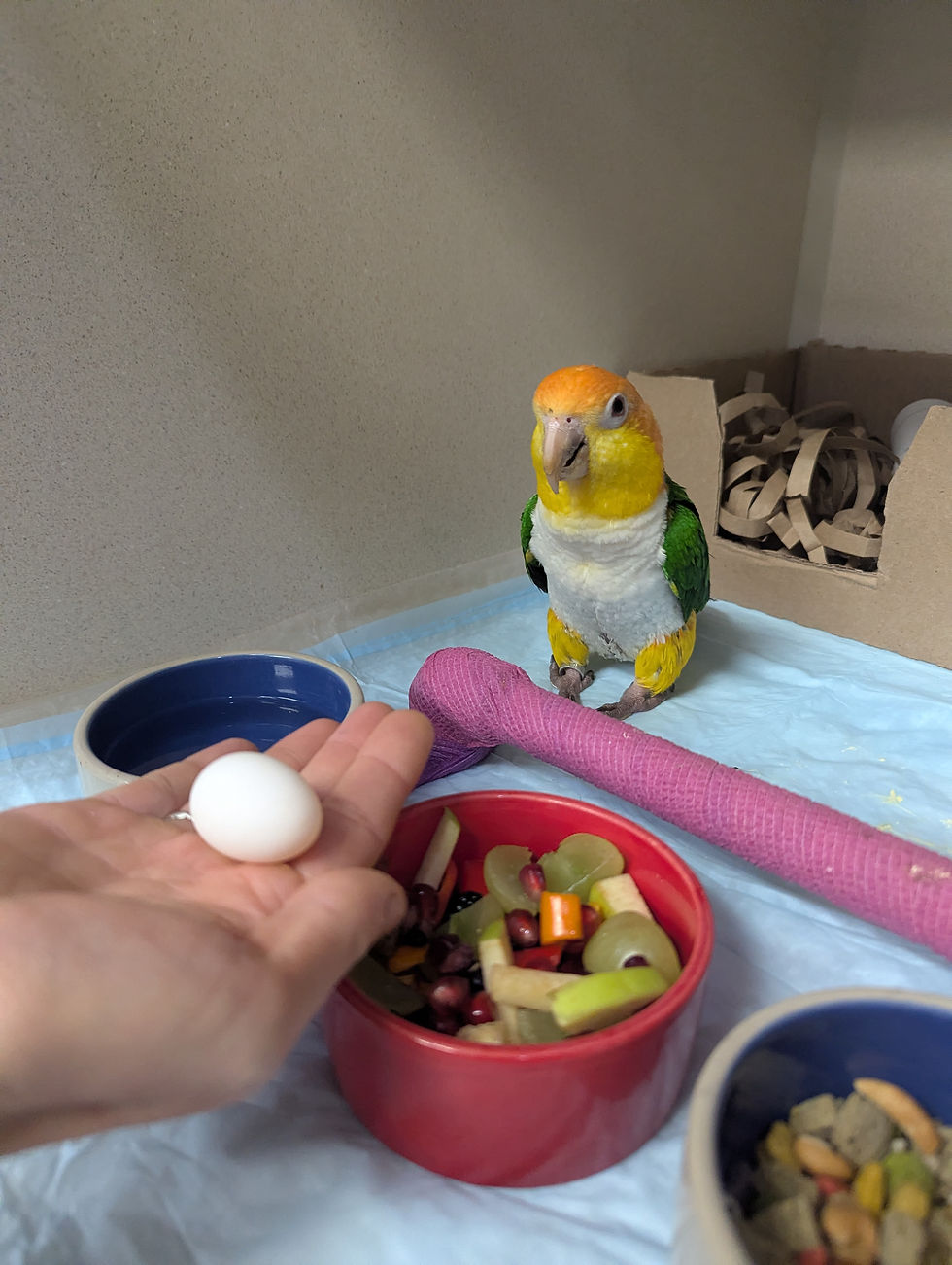
Environment: She was placed in a warm, quiet incubator with a nesting box to encourage natural egg laying.
Supportive Care: She received calcium supplements to further support natural egg laying and fluids.
The Outcome: Success Without Surgery The medical team monitored the patient closely. On the third day of hospitalization, the combination of environmental support and medical therapy was successful. The patient laid the egg without complications!
She was discharged to her home in Brooklyn in stable condition. We discussed environmental changes, such as adjusting her light cycle, to discourage her from laying more eggs in the future.
Why Specialist Care is Key Managing dystocia requires careful assessment, close monitoring, and an understanding of when medical management is appropriate versus when surgical intervention is necessary. With species-specific expertise and continuous hospitalization, we were able to support the patient through medical therapy and environmental management, allowing her to pass the egg without the added risks of surgery.
Frequently Asked Questions (FAQs)
What is egg binding (Dystocia)? Egg binding, or dystocia, occurs when a female bird is unable to pass an egg normally. This can happen for many reasons, including abnormal egg size or shape, inadequate calcium levels affecting muscle function, dehydration, inflammation of the reproductive tract, stress, or suboptimal environmental conditions. Dystocia can become life-threatening if not addressed promptly.
Can I treat egg binding at home? No. Egg binding is a medical emergency that requires prompt veterinary evaluation and treatment. Delays or improper handling can result in serious complications, including infection or rupture of the egg. Professional veterinary care is essential.
How do I stop my bird from laying eggs? Chronic egg laying places significant strain on a bird’s body, affecting calcium balance, energy reserves, and overall reproductive health. To help reduce egg laying:
Provide 12–14 hours of uninterrupted darkness each night.
Remove nest boxes, huts, and nesting or shreddable materials.
Avoid petting along the back or under the wings, which can stimulate reproductive hormones.
Consult your exotic veterinarian for individualized medical and husbandry guidance.
Do you treat birds from Brooklyn? Yes! We are conveniently located in Great Neck, a short drive from Brooklyn. We see avian patients daily for reproductive issues.
Contact Long Island Bird & Exotics Veterinary Clinic: Website: https://www.birdexoticsvet.com/ Phone: (516) 482-1101


